Why settle for
unstable frames?
BaseVera engineers premium gaming applications for high-performance mobile hardware. We solve the friction between visual fidelity and battery longevity through native Vulkan integration.
Bridging Creative
Vision and Code.
In the German gaming market, "efficiency" isn't a buzzword—it's a requirement. BaseVera was founded on the principle that mobile applications should not compromise on complexity. Whether it’s a tactical RPG inventory or a fast-paced shooter's crosshair, our UI framework ensures pixel-perfect response times.
We don't just ship games; we ship digital monoliths. Our production cycle prioritizes the 'Vertical Slice' phase, allowing developers to stress-test core mechanics on actual hardware—from high-end flagships in Berlin to mid-range devices on 4G networks in rural regions.

Dynamic HUD layering allowing for real-time environmental occlusion and contextual lighting adjustments without GPU overhead.

Our 'Anti-Ad' Box policy: Transparent infrastructure that prioritizes gameplay integrity over intrusive monetization hooks.
The Architecture Grid
System Registry / DE-CIX Certified
Complete deconstruction of the BaseVera app framework for partners and performance-oriented operators.
Vulkan API Optimization
Our hardware-sync protocol communicates directly with mobile chipsets. By optimizing draw calls and utilizing custom texture atlasing, we achieve a consistent 60-120 FPS range even under heavy thermal throttling conditions common in high-performance gaming.
Battery Impact Assessment
Honest assessment of energy usage. We implement logic that scales dynamic resolution based on remaining charge, extending play sessions by 30% without visible fidelity drops.
Failure States
How we handle packet loss: Recursive state synchronization ensures that even on unstable 4G rural connections, game state remains authoritatively verified with minimal rollback.
Hardware Sync
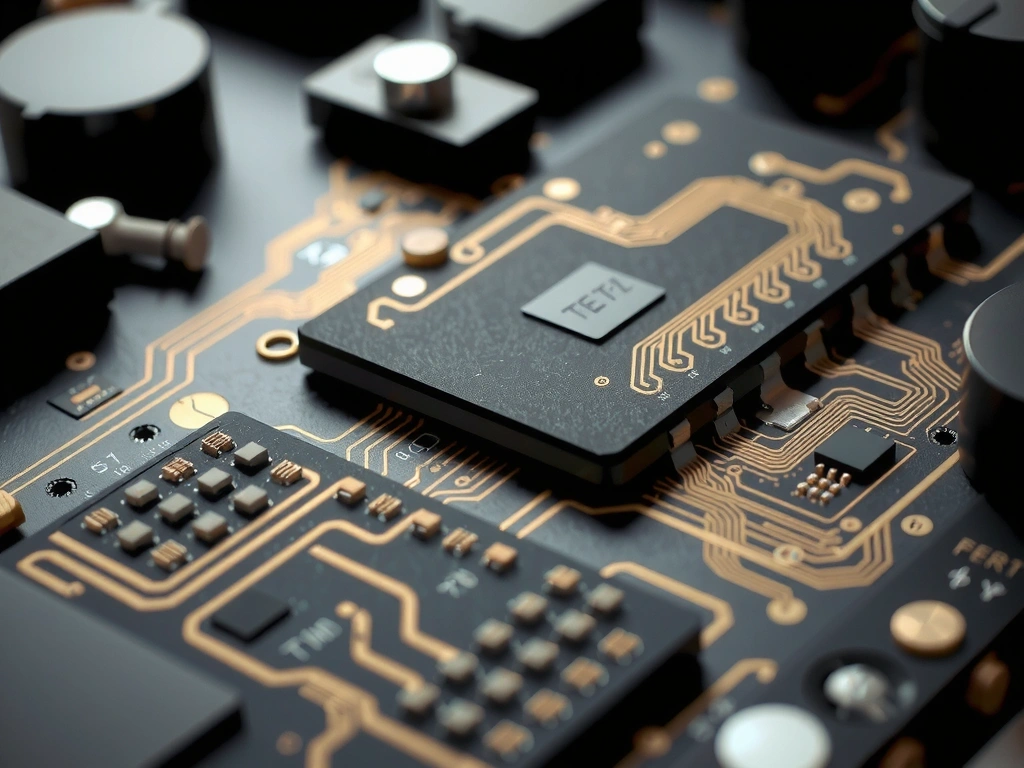
Native integration for Snapdragon Gen 4 and Apple Silicon. We leverage hardware-level ray tracing and neural processing units (NPU) to offload complex physics calculations from the CPU.
- DE-CIX Low Latency
- GSG-9 Data Protocol
- Vulkan 1.3 Compatible
- 5G Slicing Ready
Technical Glossary
Draw Calls
Often the silent killer of mobile performance. Our opinion: blindly minimizing draw calls is amateur; intelligent batching is where true fluid motion is found.
Occlusion Culling
Not just hiding what's behind walls. We view culling as a predictive algorithm that pre-loads geometry based on user movement velocity—a "Zero Leak" architecture.
Thermal Throttling
The ultimate constraint of mobile gaming. We treat heat as a limited resource, adjusting shader complexity in real-time to prevent the OS from killing the frame rate.
Data Residency
User data never leaves German jurisdictions. Compliance is not a checkbox; it is the foundation of digital trust for the competitive esports sector.
Operational Constraints
-
Bandwidth Limit
Assumes a baseline of 15Mbps. Performance degrades non-linearly below 5Mbps without "LITE-Mode" asset streaming.
-
Hardware Bounds
Optimized for Android 13+ and iOS 16+. Legacy support (pre-2022 devices) is handled via fallback shaders that disable bloom and HDR.
-
What Changes Our Mind
Shifts in Google Play Store security policies or sudden advancements in cloud-gaming latency (e.g. Starlink-level parity) would pivot our "native-first" approach.
Case Spotlight: Tactical RPG Inventory
"How UX decisions drive engagement: Why we chose gesture-based navigation over traditional button menus for complex equipment systems."

Interface Logic: Contextual Layering


Ready to integrate the BaseVera engine?
"Our prototyping tools allowed Alex to assemble a polished Steam-ready build in days, not weeks. The asset pipeline handles the heavy lifting so you can focus on game loops."