The Architecture
of Immersion.
BaseVera builds monolithic digital interfaces for gaming applications. We reject the ephemeral nature of templates in favor of structural integrity and German engineering precision.
A Single
Stubborn Pixel.
Chapter 01: Genesis
BaseVera's origin begins not with a business plan, but with a specific frustration: the fragmentation of mobile gaming interfaces. Our founder, an architect turned UI engineer, realized that while gaming engines were pushing the limits of physics, the wrappers—the menus, the stores, the haptics—felt like flimsy plastic shells.
The name BaseVera combines Base (a solid foundation) with Vera (truth). We believe that a gaming application should feel like a monolithic object—tangible, heavy, and undeniably premium. In our Berlin studio, we treat code as a construction material, layering performance with a signature visual weight that standard app frameworks cannot replicate.
"We don't design pages; we build environments. If a button doesn't feel like it has physical mass when you press it, we haven't finished our job."— Lead Architect, BaseVera
This commitment to "Quiet Luxury" means agonizing over the details that players feel but rarely name: the sub-20ms response to a touch gesture, the weight of a shadow, and the mathematical harmony of a 12-column grid system that remains unbroken regardless of device orientation.
BaseVera replaces generic engagement metrics with raw technical structuralism. We design for high-stakes environments where lag is a failure state and visual fidelity is a requirement.
Status: Verified High-Perf
The Visual Lexicon
DEFINING OUR DESIGN STANDARDS
Monolithic UI
The rejection of floating elements. All UI components are anchored to a structural grid, creating a sense of permanence and unshakeable stability.
Opinion: Floating UI feels cheap.
Tactile Latency
The window between input and response. We optimize for a "snap" effect, ensuring the digital surface reacts with the speed of physical matter.
Opinion: Frames matter more than pixels.
Visual Bible
A 100-page document defining every material, sound, and motion curve before a single line of production code is written.
Opinion: Guessing is for amateurs.
Zinc Texture
A bespoke CSS filter stack used to give digital surfaces a subtle, non-repeating noise grain, mimicking industrial metals.
Opinion: Flat color is a lie.
Hard-Cut Motion
Transition logic that eschews "bouncy" animations for rapid, purpose-driven state changes that reflect high-end hardware logic.
Opinion: Animation shouldn't wait.
Brass Hairlines
Precision separators (1px @ #b5a264) used to guide the eye through complex data sets without adding visual clutter.
Opinion: Structure is beauty.
Engineering Constraints
Thermal Throttling Logic
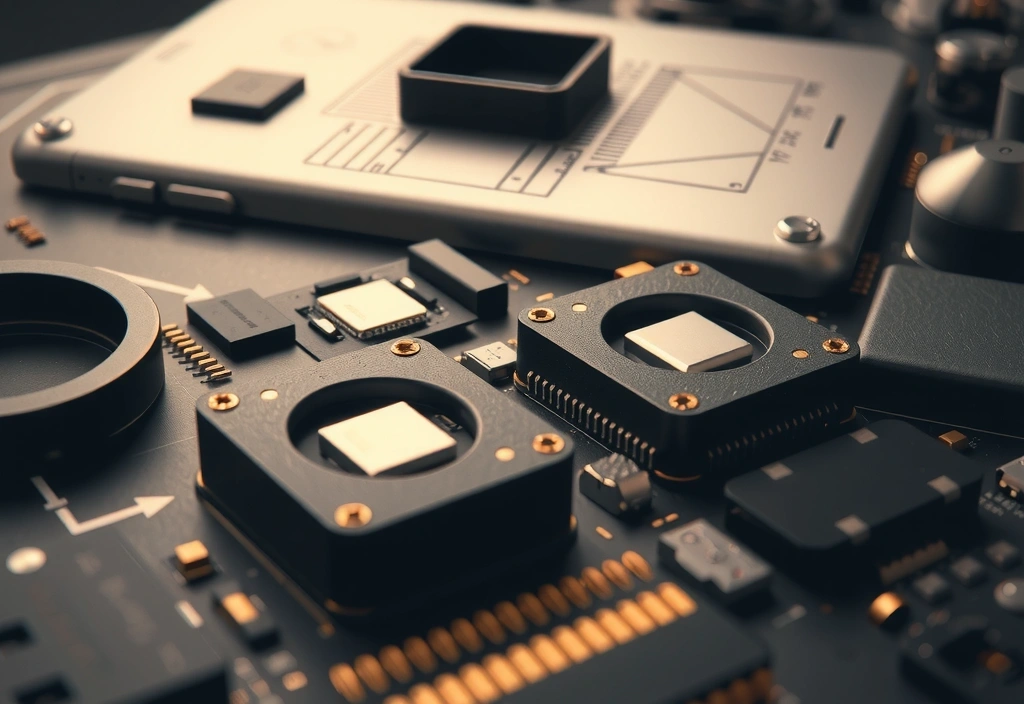
Our applications monitor device temperature in real-time, adjusting shader complexity for low-end hardware without breaking the visual aesthetic.

Native vs. Hybrid Blend
We utilize native bridge components for 120Hz refresh rate synchronization while maintaining a lightweight hybrid wrapper for cross-platform speed.
Method Note: Robustness Assessment
Before any design enters the "BaseVera Verified" state, it undergoes a Stress-Visual test. We evaluate the interface against three non-negotiable criteria:
- Linguistic Resilience: Does the monolithic grid break when German-length compound nouns (e.g., Benutzerschnittstelle) are used?
- Input Integrity: Is the touch-target error rate below 0.01% under rapid, frantic gameplay conditions?
- Packet Persistence: How does the UI represent "Truth" when data residency protocols or rural 4G bandwidth introduce latency?
Architectural Trade-offs
Visual Fidelity vs. Battery longevity
Our shaders are high-impact. Mitigation: We implement intelligent LOD (Level of Detail) systems that detect battery saver modes and pivot to simplified vector rendering instantly.
Structural Rigidity vs. User Customization
We do not allow "theming." Mitigation: Every UI element is scientifically placed for ergonomic perfection; customization is a distraction from the intended core loop.
Complex Shaders vs. Local Cache
High-res textures increase initial load. Mitigation: Dynamic background streaming ensures the core "Base" is visible within 200ms while detail layers pop in as assets resolve.
Ready to Build
the Unbreakable?
Join the partners who trust BaseVera for high-performance mobile gaming wrappers. Let's discuss your visual bible and technical constraints.
Latency Goal
<18ms
Uptime Metric
99.98%
Compliance
GDPR/DE
Architecture
Monolithic